The gloves are still off, and this war is no longer being fought like a polite little exchange of warnings over the horizon.
This is starting to look less like a standoff campaign and more like the methodical demolition of a regime’s war machine. The United States and Israel are not just lobbing messages anymore. They are stripping away command nodes, oil infrastructure, launch sites, intelligence buildings, satellite-control facilities, ammunition bunkers, and emergency command structures. Public reporting now has the U.S. and Israel hitting targets across Iran while Trump repeats the same demand: unconditional surrender.
And here is the ugly truth for Tehran: the sky does not belong to them.
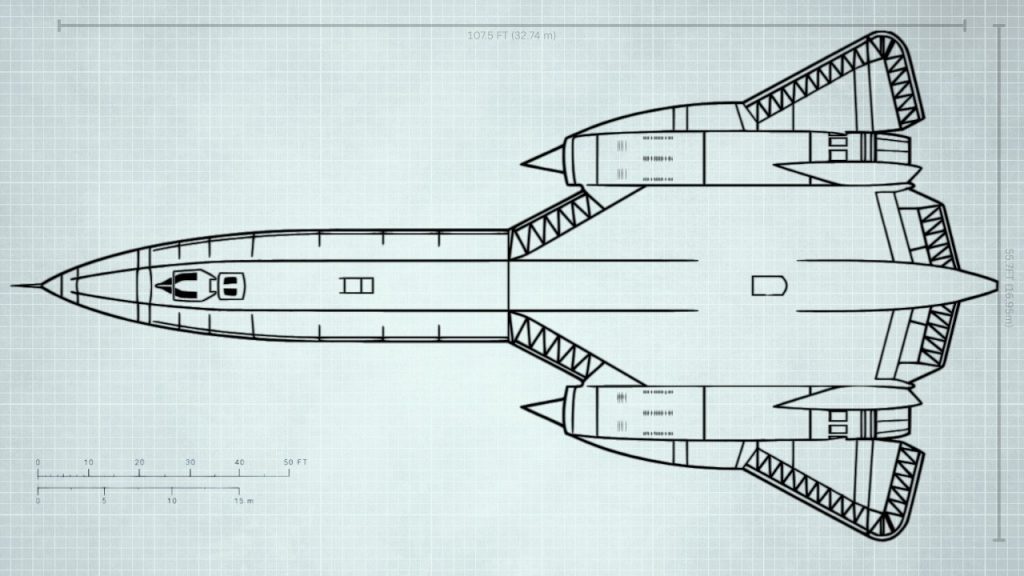
The B-52 is already a proven carrier for the AGM-158 JASSM family, and the aircraft’s upgraded rotary launcher was specifically built to increase the bomber’s conventional punch. That matters because once bombers and strike aircraft can operate with that kind of freedom, the menu of pain gets bigger fast.
So whether this remains a mostly standoff war or keeps evolving into heavier guided-bomb work, the strategic fact is the same: Iran has not shown an ability to contest U.S. air dominance in any meaningful way. The regime can still fire missiles, drones, and terror at cities and infrastructure, but against American airpower it is increasingly fighting with the posture of a man swinging at ghosts. That is why its war machine is being blown backward, piece by piece, toward the technological equivalent of the Middle Ages.
This is what total air superiority looks like. It looks like one side debating targets, sequencing, and timing, while the other side scrambles through smoke, broken chains of command, and shattered facilities, still pretending it is running a strategy. It looks like bombers, strike aircraft, cruise missiles, and guided weapons turning headquarters into craters faster than a regime can print new job titles for the next dead man. It looks like emergency command posts becoming emergency funerals. And it looks like a government still trying to bark threats at the same moment its own military bureaucracy is being peeled apart in public.
The war keeps expanding, the command structure inside Iran keeps getting shredded, and the regional oil map is now inching closer to open economic warfare. Israel is still targeting leadership, intelligence, bunkers, bases, and command networks. The U.S. is tightening its warning language and broadening regional support. The UAE and Saudi Arabia are intercepting incoming attacks. Turkey is getting more active. And Iran is now openly threatening Gulf oil facilities, which could drag even more countries from defense into offense.
Iran can still kill. It can still terrorize. It can still launch missiles at cities, airports, and oil infrastructure. But that is not the same thing as controlling the air, protecting your own critical nodes, or stopping a modern U.S.-Israeli air campaign. Those are different leagues entirely. Right now, Tehran looks like it is discovering that the hard way.
And hovering over all of it is Trump’s blunt message: surrender.
Not negotiate. Not stall. Not hide behind another layer of spokesmen, militias, clerics, and dead-end diplomacy. Surrender. (Reuters)
But if the command network is wrecked, the leaders are being hunted, and the emergency apparatus is already taking hits, then the final question writes itself: When Trump gives the order to surrender, is there still a functioning regime left to take the call — or only ruins, static, and men waiting to be next?
Trump has now ordered them to surrender again. The question is no longer whether the message was sent.
The question is whether there is anyone left in Tehran who can still answer the phone.
Iran
- Israel reportedly killed Abu Al Gasam Baba Yan, the newly appointed head of the Supreme Leader’s military bureau and chief of staff of the regime’s emergency command.
- According to the IDF, Baba Yan coordinated between regime bodies to advance operations against Israel and oversee emergency mechanisms.
- The strike reportedly took place in Tehran and was later confirmed as the targeted assassination referenced earlier.
- The Shahan oil depot was hit, and the fire was still burning.
- Tehran saw more massive explosions as damaged oil infrastructure, pipes, drains, and surrounding systems burst into flames.
- Burning fuel reportedly flooded into streets, drainage channels, and sewer systems, creating dangerous secondary fire zones.
- The regime has now reportedly declared that it will target oil facilities in Persian Gulf Arab countries, including Saudi Arabia, the UAE, and others.
- Iranian civilians were repeatedly warned to stay home, but many were still seen outside in active strike zones.
- In Esfahan, the IRGC intelligence building was destroyed by the Israeli Air Force.
- The IDF later said it completed new waves of strikes in Tehran, hitting:
- the IRGC’s space and satellite command
- 50 ammunition bunkers
- the Cayam satellite control center
- passage bases
- internal security headquarters
- IRGC ground force complexes
- These attacks are described as part of a campaign to cripple the core infrastructure and capabilities of the regime.
- Central Command warned that Iranian forces are launching drones and ballistic missiles from heavily populated areas in cities such as Dezful, Esfahan, and Shiraz, putting civilians at risk.
- Iran’s internal internet and phone disruptions are described as likely to continue until the regime fully collapses or the armed forces take control.
- The regime’s leadership structure is again described as fragmented, unstable, and unable to centralize decision-making.
- There are concerns that hardliners may try to rush nuclear work at sealed sites without coherent oversight.
- Rumors were mentioned that Israeli special forces may be considering taking control of nuclear sites rather than simply destroying them.
Israel
- Israel continues precision strikes across Iran, especially against regime leadership, intelligence facilities, and military infrastructure.
- The IDF confirmed the elimination of Baba Yan and framed it as part of a broader effort to decapitate the regime’s military command.
- Israel warned that anyone involved in choosing or appointing a new Supreme Leader could also be targeted.
- The warning extended to members of the Assembly of Experts, who had reportedly convened to deal with succession.
- The IDF also released messaging emphasizing that women are at the forefront of Operation Roaring Lion, including female soldiers and female pilots.
- Israel came under another heavy round of missile and drone attacks, with most reportedly intercepted.
- There were impacts in Tel Aviv, including damage to cars and urban areas.
- Sirens sounded again across parts of Israel during the latest wave.
- Israeli officials reportedly said the operation will take longer and require patience.
United States
- U.S. Defense Secretary Pete Hegseth released a statement through CENTCOM saying that if Americans are killed or threatened anywhere on Earth, the U.S. will hunt down those responsible “without apology and without hesitation.”
- The text frames this as a return to a Roman-style doctrine: harm an American anywhere, and the United States will come after you.
- Central Command issued a detailed civilian safety warning to people in Iran, saying the regime is operating from densely populated areas and that these locations may therefore become legitimate military targets.
- CENTCOM specifically named Dezful, Esfahan, and Shiraz as places where Iranian forces are using civilian-heavy zones for military launches.
- The U.S. warning also accused Iran of deliberately targeting civilian airports, hotels, and residential neighborhoods across the region.
- The U.S. is described as continuing to support Gulf states under expanding regional pressure.
United Arab Emirates
- The UAE denied reports that it had attacked Iran’s water supplies, calling those claims false.
- UAE officials said they would never place the Iranian people in the same category as the Iranian regime.
- The UAE stressed that the Iranian people are victims of the regime and that the Emiratis care about their well-being.
- At the same time, the UAE military remained highly active, intercepting incoming Iranian drones and missiles.
- Emirati footage reportedly showed drones being shot down by the UAE military.
- The UAE Minister of Defense reported that Iran targeted the Emirates with:
- 17 ballistic missiles
- 117 drones
- Of the 17 missiles, 16 were intercepted, while one reportedly fell into the sea.
- The UAE also reported that Iran has launched 238 missiles and more than 1,000 drones overall at the Emirates, killing four people.
- According to the transcript, the UAE has now been hit more than Israel in terms of incoming missile volume.
- The UAE foreign ministry said the country is acting in self-defense, does not seek escalation, but will fully defend its sovereignty and national security.
Saudi Arabia
- Saudi Arabia has also been actively intercepting Iranian attacks.
- Saudi officials confirmed that in the city of Al Kharj in the eastern part of Riyadh province, at least two people were killed and 12 injured after the latest round of ballistic missile attacks from Iran.
- Saudi Arabia is described as increasingly likely to retaliate if attacks on its territory and oil infrastructure continue.
Bahrain
- Sirens sounded again in Bahrain as the country came under another round of Iranian attack.
- Bahrain remains part of the active Gulf front facing repeated IRGC missile and drone pressure.
Turkey
- Turkey is now reportedly deploying F-16 fighter jets to counter attacks coming from Iran.
- These jets are being sent to northern Cyprus as part of increased regional security measures.
- Turkey is described as becoming more active as the war spreads.
Lebanon
- Beirut remained under watch again, with possible incoming activity being monitored live.
- Lebanon remains a live front in the background of the broader conflict picture, though the main focus of this update was Iran and the Gulf.
France
- The French military is reportedly on its way to support regional operations.
- France is grouped with other European countries moving more seriously than the UK.
- At least defending its own assets in area
Netherlands
- The Dutch military was also described as being on the way to the region.
- Later clarification suggested this may refer more to Dutch commanders and military participation broadly, rather than a full Dutch ground presence.
United Kingdom
- The UK is again described as slow, bureaucratic, and ineffective.
- Britain is mocked for still operating on a 9-to-5 rhythm while others move in wartime posture.
- British response as too sluggish to matter in the near term. It may be over by the time they show up.
Australia
- The Iranian women’s football team, after protesting by not singing the anthem in Australia, is now reportedly being forced to return to Iran.
- The regime had already labeled them traitors.
- The team later used sign language to communicate “help” while boarding the coach.
- The Australian government is criticized for not temporarily keeping them safe until conditions improve.
- The expectation is they may face arrest, punishment, torture, and retaliation against their families upon return.
Regional / Multi-country picture
- Iran is now threatening the oil infrastructure of Gulf Arab states, which could turn a military war into an energy and shipping crisis.
- Gulf countries are steadily shifting from defensive interception toward possible offensive retaliation.
- The U.S. is escalating its language and reinforcing the idea that threats to Americans anywhere will be answered directly.
- Israel is not just targeting military assets, but the regime’s command structure, succession process, intelligence networks, and internal enforcement apparatus.
- Mossad-style warning messages are reportedly being sent directly to Basij and IRGC-linked personnel, telling them they are identified and must surrender or flee.
- The regional coalition against Iran is hardening, while Iran’s internal structure appears increasingly broken.
Iranian opposition / transition plan
- Reza Pahlavi and his team have published a 178-page transition document laying out a post-regime roadmap.
- The plan includes:
- a transitional political framework
- legislative, executive, and judicial bodies
- a referendum within 4 months on the system of governance
- an assembly election within 6 months
- a constitutional referendum within 14 to 20 months
- either a coronation as King Reza II if constitutional monarchy is chosen
- or a republican path with elections if a republic is chosen
- The plan also includes a transitional justice program, special prosecutors, and legal mechanisms for dealing with regime crimes.
- A major difference from past revolutions: there is already a detailed post-regime structure on the table.