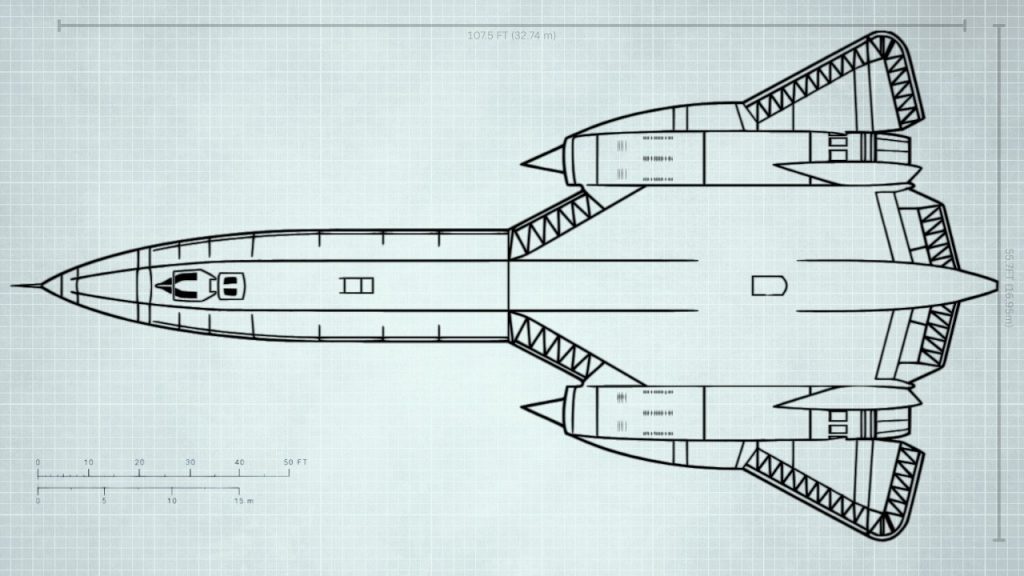
This documentary "Strategic Air Command A Proud Heritage" (1987) traces the rapid evolution of U.S. air power from the interwar years through the height of the Cold War, focusing on the pivotal role of the Strategic Air Command (SAC). Emerging from World War I innovations and expanding through World War II, strategic bombing became a cornerstone of U.S. military doctrine, with leaders like Billy Mitchell and Curtis LeMay pioneering long-range bomber and nuclear deterrence strategies. During WWII, unescorted daylight raids and later atomic bombings helped bring about victory. Postwar, SAC was established to maintain nuclear readiness and global reach, playing critical roles in crises like the Berlin Airlift, the Korean War, Vietnam, and the Cuban Missile Crisis. The command underwent continuous modernization, introducing bombers like the B-52 and B-1, reconnaissance aircraft like the SR-71, and missiles such as Minuteman and Peacekeeper. Through global exercises, forward deployments, and technological innovation, SAC became the backbone of U.S. nuclear deterrence, exemplifying commitment to national defense, technological superiority, and strategic dominance. 0:33 – Aviation matured quickly between WWI and WWII, with barnstormers, racers, and visionaries pushing its limits. 1:07 – Billy Mitchell demonstrated air power's effectiveness; aerial refueling was successfully tested in 1927. 2:34 – Strategic Air Command (SAC) was created to protect U.S. freedom, emphasizing strength, peace, and speed. 3:27 – The U.S. entered WWII underprepared, but strategic bombing was believed to be the key to victory. 5:03 – Losses prompted advances in tactics and technology; air superiority helped enable the D-Day invasion. 6:15 – Precision bombing devastated Nazi Germany’s war infrastructure, hastening the end of the war in Europe. 7:10 – Focus shifted to Japan, with B-29s launching effective incendiary and strategic bombing raids. 9:04 – Despite devastation, Japan resisted until the atomic bombings of Hiroshima (Aug 6) and Nagasaki (Aug 9). 10:18 – Postwar assessments credited strategic air power with playing a decisive role. 10:53 – SAC was officially established in 1946 to develop long-range and nuclear bombing capabilities. 12:35 – USAF became a separate service in 1947. 13:26 – The Berlin Crisis in 1948 tested SAC's readiness. 15:07 – First tanker squadrons enabled extended range operations; Curtis LeMay became commander in 1948. 16:05 – Korean War. 17:01 – B-36 and B-47 bombers entered service. 18:02 – The B-52 was introduced in 1955. 19:02 – B-52s demonstrated global flight with aerial refueling. 20:34 – SAC trained for low-altitude bombing missions to counter improved Soviet defenses. 21:05 –ICBM programs including Atlas, Titan, Minuteman launched. 22:05 – “Looking Glass” airborne command post created to ensure continuity of command post-nuclear strike. 23:02 – During the Cuban Missile Crisis, SAC was fully mobilized. 24:15 – By 1963, SAC had a balanced force of ICBMs and bombers. 25:38 – Key role in Vietnam through extensive aerial refueling (Young Tiger) and bombing campaigns. 27:05 – New aircraft like the SR-71 and FB-111 expanded SAC’s reconnaissance and strike capabilities. 28:03 – B-52s were modified (Big Belly) for massive bomb loads in Vietnam; vital in breaking enemy sieges. 29:19 – Operation Linebacker II (Dec 1972) demonstrated SAC's concentrated bombing power against North Vietnam. 31:08 – Strategic bombing helped pressure North Vietnam toward peace; SAC modernized its arsenal. 32:00 – Gen. Russell Doherty assumed command in 1974, reaffirming SAC’s critical nuclear role. 33:08 – SR-71 set records; B-1A test flight introduced a new low-level nuclear-capable bomber. 34:05 – Modernization continued. Advanced command aircraft and Minuteman missile upgrades. 35:17 – The MX (Peacekeeper) missile program amid arms control debate. 36:48 – SAC exercised full wartime simulation in "Global Shield" operations. 37:51 – Peacekeeper missile had its first flight; KC-10 tanker introduced for advanced air refueling. 39:08 – Peacekeeper and B-1B entered service, solidifying the strategic nuclear triad: bombers, ICBMs, and submarines. 40:50 – Gen. John Chain emphasized SAC's modernization and dedication to excellence. 41:06 – For over 40 years, SAC stood as the backbone of U.S. strategic deterrence and national defense. This film is part of the Periscope Film LLC archive, one of the largest historic military, transportation, and aviation stock footage collections in the USA. Entirely film backed, this material is available for licensing in 24p HD, 2k and 4k. For more information visit http://www.PeriscopeFilm.com
Source: "STRATEGIC AIR COMMAND – A PROUD HERITAGE" 1987 USAF NUCLEAR DETERRENCE & NATIONAL DEFENSE GG48155