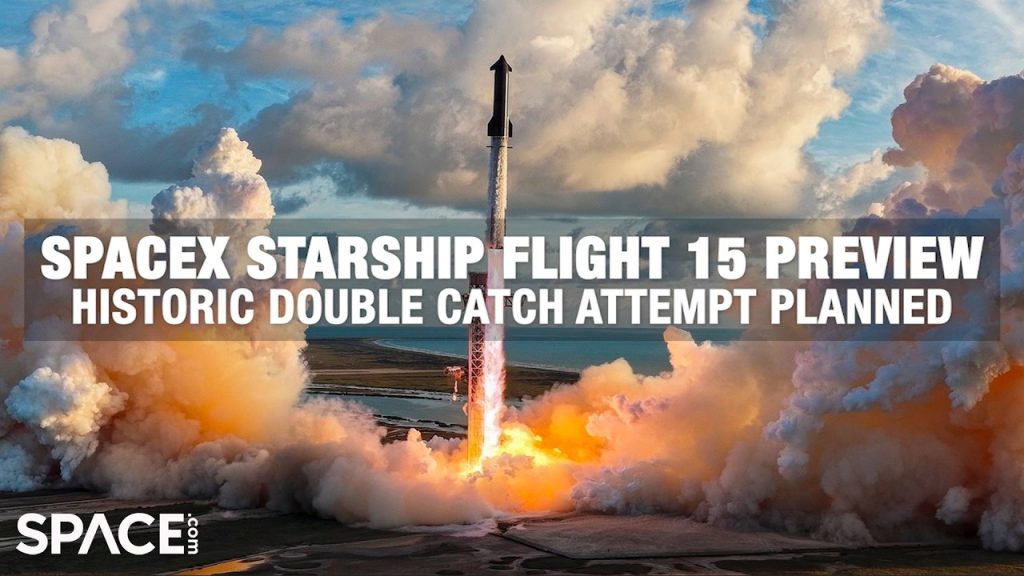
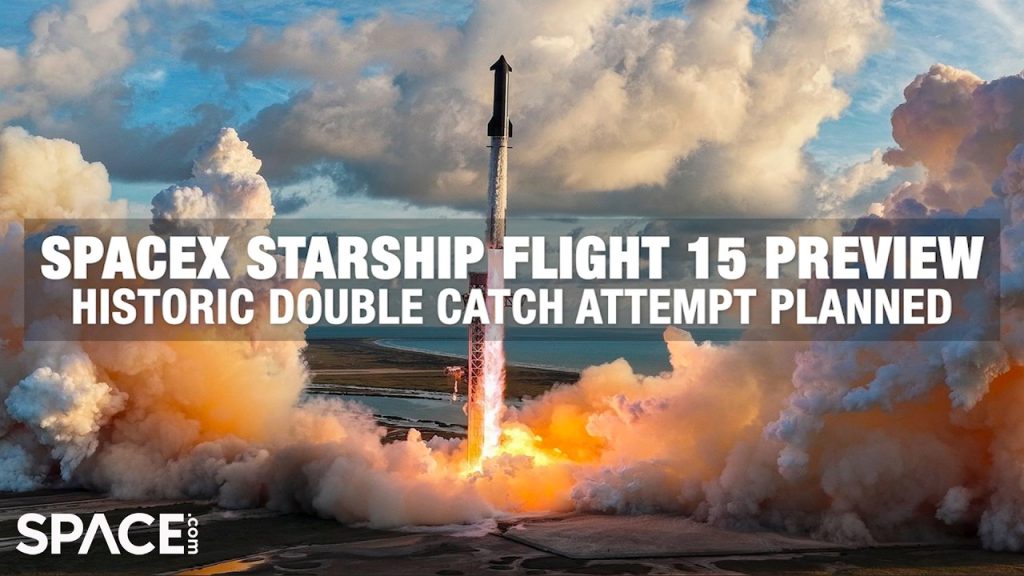
At about 4:20 PM Eastern on Saturday, November 14, 2026, the launch tower at Starbase, Texas did something no military planner on Earth can ignore: it caught a returning orbital spacecraft in mid-air. Ship 42, the upper stage of SpaceX’s Starship, came back from a day in orbit, threaded its way down through the atmosphere, and was plucked out of the sky by the arms of the tower it had launched from the evening before.
It is the first time the orbital stage of a rocket has ever been recovered this way. Strategists in Washington, Beijing, and Moscow all watched the same pictures. They will not have missed what it means.
What Happened Over Starbase
Starship Flight 15 launched Friday evening — the fifteenth test flight of the system and the fourth for the enlarged Starship V3. The ship deployed 26 Starlink V3 satellites, spent about a day in orbit, fired its deorbit burn at roughly 3:23 PM Eastern on Saturday, and survived re-entry before making its pinpoint descent to the tower. The flight’s booster, Booster 22, had its own catch called off Friday over a guidance issue and splashed down in the Gulf instead — which only underlines the point: the ship, the half that actually reaches orbit, is the half that came home to the tower.
Why the Pentagon Cares About a Tower Catch
Modern war runs on space: communications, navigation, targeting, and surveillance all hang from satellites. Until now, every one of those satellites rode a rocket that was thrown away after a single use, at prices and production rates set by that waste. A fully reusable heavy-lift system — booster caught, ship caught, both turned around at the same pad — collapses the cost of putting mass into orbit and, just as important, collapses the time between launches.
That is a strategic capability, not a commercial curiosity. A nation that can launch heavy payloads weekly, cheaply, and on short notice can replace lost satellites in a crisis, surge new constellations into orbit faster than an adversary can shoot them down, and move cargo around the planet on sub-orbital timelines that no air force can match. The United States now has the working prototype of that capability, demonstrated live. China’s space program is racing to copy reusable rocketry of its own; Saturday’s catch is a reminder of how far ahead the American commercial sector currently runs.
The New High Ground
Every era of warfare has its decisive terrain. The high ground of the twenty-first century is orbit, and the side that can reach it cheapest, fastest, and most often holds it. On Saturday afternoon, a tower in Texas caught a spaceship out of the sky — and the contest for that high ground tilted, visibly and permanently, toward the country that built it.